
Are you wondering whether ID Resolve or LifeLock is the best option for staying safe online and avoiding becoming a victim of fraud or identity theft?
Both LifeLock and ID Resolve are popular threat monitoring and identity protection services. However, they differ in the specific features they offer and pricing. In this comparison guide, I will compare LifeLock and ID Resolve, so you can decide which one is better for you.
ID Resolve Features and Pricing
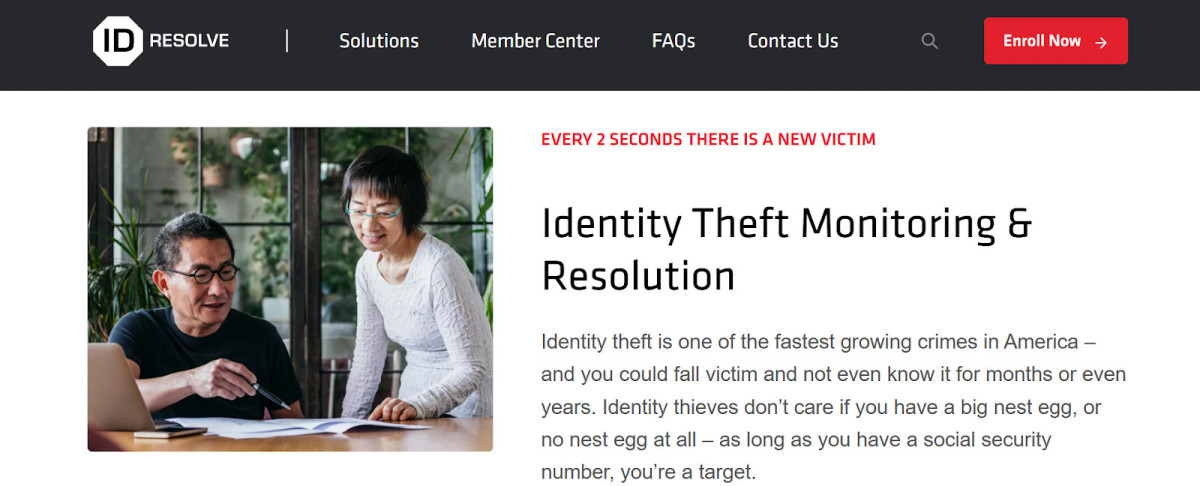
ID Resolve focuses on identity theft monitoring and resolution in case of fraud.
ID Resolve has two plans. The standard ID Resolve plan is primarily focused on resolution after identity theft, while the ID Resolve 360 plan offers additional preventative monitoring as well as insurance of up to $1 million for certain restoration fees.
Here are the core features of the Standard plan:
- Assistance with reporting the theft to authorities.
- Help with putting a freeze on your credit and reporting the theft to the three credit bureaus.
- In case of fraud, IDResolve will help you file disputes and follow up on your case.
- If your wallet gets stolen or lost, IDResolve will help you replace lost credit cards, driver’s licenses, and more by notifying the appropriate institutions.
- If you are over 100 miles from home, IDResolve can issue you an emergency cash advance of up to $500.
- If you are the victim of medical identity fraud, IDResolve will assist with correcting medical records.
As you can see, the main benefit of the standard plan is assistance with filing reports, notifying the correct authorities and organizations, dealing with financial or medical institutions, and so on.
While you can do all of that yourself, it can be overwhelming to deal with, especially if you just lost all of your credit cards, ID cards, and more. It’s easy to feel stranded. IDResolve will help streamline the process and take the stress off your back.
The emergency cash advance is useful, but it’s important to note the fine print. This cash advance is only guaranteed with a valid credit card. In other words, you need a credit card to secure the $500.
If you have a credit card, you may not even need this advance, because your credit card could come in handy in purchasing flights and accommodation. Most credit cards also offer cash advances with a limit a lot higher than $500 (although interest would be charged at a high rate).
IDResolve does say that it may provide a cash advance even without a credit card to secure it, but that you must pay it back within 45 days, or else interest at a rate of 1.5% per month will apply. However, this is not guaranteed. In its own words, “ID Resolve shall be under no obligation to advance funds not otherwise secured by a valid credit card.”
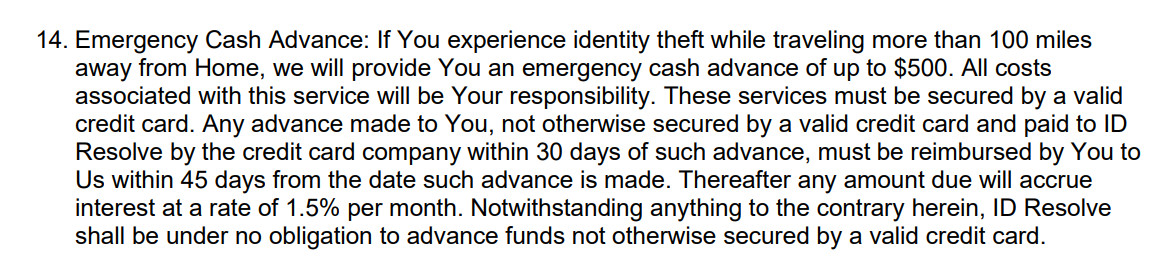
It’s worth noting the fine print of the $500 cash advance feature: It is only guaranteed if secured by a credit card.
The ID Resolve 360 plan, on the other hand, takes protection up a notch and offers active monitoring, not just help if theft occurs. It offers the following core features:
- Active credit monitoring for signs of identity theft, with instant alerts of suspicious activity.
- Security software that can help you stay safe online.
- Email health checks to see if your email address is contained in a data breach.
- Help with opting out of spam mailings and phone call lists.
- Assistance with researching solicitations on a case by case basis to determine if it is a scam.
- Up to $1 million in identity theft insurance. This covers out-of-pocket expenses related to the recovery process and expenses you may incur while trying to fix your credit, such as professional service fees.
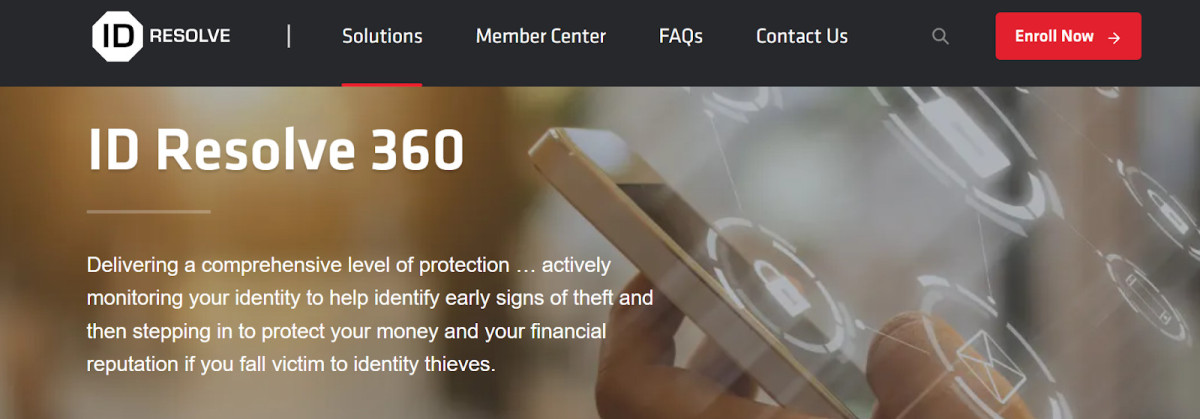
While that may seem impressive, the truth is that it doesn’t offer much. There are many free credit monitoring and alert services that inform you of suspicious credit activity as well as if your email has been breached.
Some banks, like Capital One, offer their own credit monitoring services, but you can also use Experian or Credit Karma for free credit monitoring. Experian, one of the three credit bureaus itself, offers credit monitoring as a free service.
Meanwhile, you can use Have I Been Pwned to check for any past breaches. For alerts of future breaches, use its free notification service.
There is the FTC’s Do Not Call list to opt out of spam calls and DMAchoice.org for unwanted mail.
The $1 million in insurance sounds like a lot, but it’s important to note that it doesn’t actually cover stolen funds. Instead, it covers professional service fees you may incur when trying to fix your credit and other such fees, such as hiring a credit restoration service or lawyer.
All in all, ID Resolve offers a lot of features, but the truth is that you don’t really need to pay for them.
With the Standard plan, you will get assistance with filing reports, but you can do that all by yourself by simply calling your bank and the credit unions. You can put a freeze on your credit by yourself for free with the credit unions.
Even most features offered in the ID Resolve 360 plan are available for free from other services, and I don’t think the other features (such as the scam research assistance feature) justifies the hefty price.
LifeLock Features and Pricing
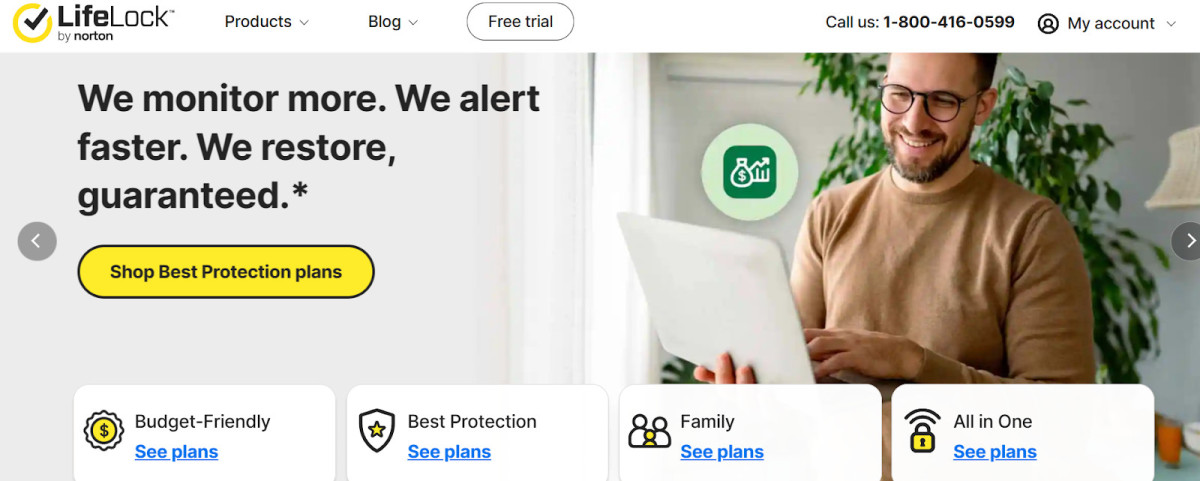
LifeLock offers a variety of flexible plans, with various levels of protection and insurance.
LifeLock also has a variety of plans. Let’s start with the LifeLock Standard plan, which offers the following core features:
- Credit monitoring (with one bureau) and alerts of credit activity.
- Dark web monitoring and alerts if your data is leaked or found on the dark web.
- Monitoring of public records sites for your personal data and monitoring of other public sources, such as unemployment applications and public records.
- $1 million in insurance coverage for lawyers and professional restoration fees in case of identity theft.
- Up to $25,000 in insurance coverage for lost funds due to travel expenses, lost wages, document replacement fees, and other expenses incurred as a result of identity theft.
- If you lost your wallet, LifeLock will assist with canceling and replacing your cards.
- Professional help with restoring your identity in case of identity theft.
- Up to $25,000 in stolen funds reimbursement. This covers money stolen from your bank, credit, or investment accounts.
As you can see, although it only monitors one credit bureau, it already provides a lot of what ID Resolve only offers in the ID Resolve 360 plan and more, such as $1 million of insurance coverage for restoration fees, dark web monitoring, credit monitoring, and more.
A significant benefit that LifeLock has over ID Resolve is that it will reimburse you for stolen funds. This isn’t just insurance for restoration fees but covers actual money drained from your bank account due to identity theft. Not only that, but it is a lot cheaper than ID Resolve.
The LifeLock Advantage plan takes things to another level, offering all of the above plus reimbursement of up to $100,000 in stolen funds.
With the Advantage plan, you also benefit from financial monitoring of your bank accounts and credit cards to detect suspicious charges, withdrawals, and other activity.
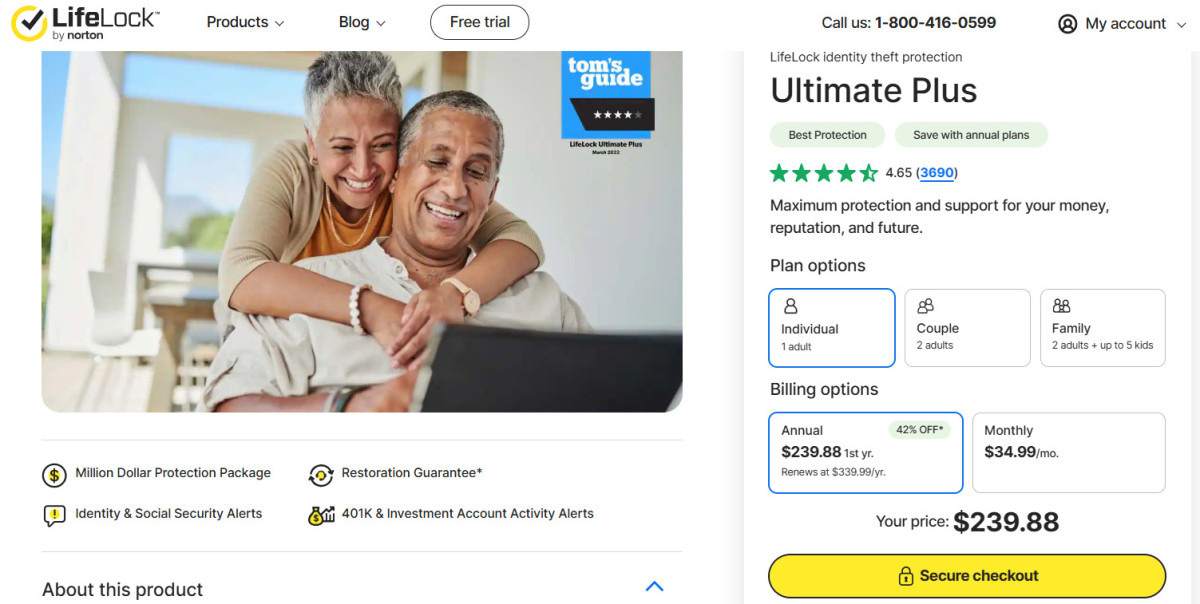
Finally, there is the LifeLock Ultimate Plus plan, which includes all of the above plus the following:
- Bank account takeover attempt alerts.
- Credit monitoring with all three bureaus, not just one.
- 401(k) and investment account monitoring.
- Home and property title monitoring.
- Reimbursement of up to $1 million in stolen funds.
- Reimbursement of up to $1 million in personal expenses such as document replacement fees, lost wages, and travel.
- Social media monitoring.
Pricing: ID Resolve vs. LifeLock
ID Resolve offers the following pricing options:
| Monthly | Yearly | |
| ID Resolve | $13.25 | $159 |
| ID Resolve 369 | $22.42 | $269 |
Meanwhile, LifeLock offers the following plans:
| Monthly | Yearly | |
| LifeLock Standard | $11.99 | $89.99 |
| LifeLock Advantage | $22.99 | $179.88 |
| LifeLock Ultimate Plus | $34.99 | $239.88 |
LifeLock also offers a cheap plan called LifeLock Identity Advisor for $4.99/month or $39.99/year, which offers basic features such as dark web monitoring, data breach alerts, and professional support if your identity is compromised. However, I don’t think it’s worth it for what it offers, as this kind of monitoring is available for free, as mentioned earlier.
In addition, LifeLock offers plans that are bundled with Norton 360, an antivirus software. These plans are available for both the Standard plan ($14.99/month or $99.99 for your first year and $159.99/year afterward) and for Ultimate Plus ($34.99/month or $299.99 for your first year and $364.99/year afterward).
Protection Depth and Affordability: A Comparison
All in all, LifeLock offers much better monitoring and restoration services.
When it comes to monitoring, LifeLock not only monitors for suspicious credit activity, such as new accounts that are opened, but it also offers (depending on your plan):
- Financial accounts monitoring
- Social media accounts monitoring
- Investment accounts monitoring
- Home and property title monitoring
- False crime monitoring
- Dark web monitoring
- Public record sites monitoring
- And more
On the other hand, IDResolve does not offer monitoring on its basic plan. Even with the ID Resolve 360 plan, it only offers basic monitoring.
When it comes to restoration, IDResolve focuses mostly on assisting you in filing reports, replacing documents, and so on.
It offers a $500 emergency cash advance, which is nice, but you need a valid credit card to guarantee it. Besides, $500 is often not nearly enough to book a flight back home, especially when you count in other expenses such as hotel stays that you must pay for while waiting for a flight.
LifeLock does all that (except for the $500 cash advance). In addition, it offers reimbursement of stolen funds, which can come in handy if your bank account is drained. This is something ID Resolve does not offer and is something that would certainly give you peace of mind.
LifeLock is, overall, cheaper than IDResolve for what it offers. The Standard plan, which overlaps with ID Resolve for most of the features, is significantly cheaper if you pay yearly, while the Advantage plan is only slightly more expensive and offers many more benefits.
Both offer couple plans, but LifeLock also offers family plans that include up to five children and offer the same features for children, such as SSN monitoring.
Alternatives to Know About
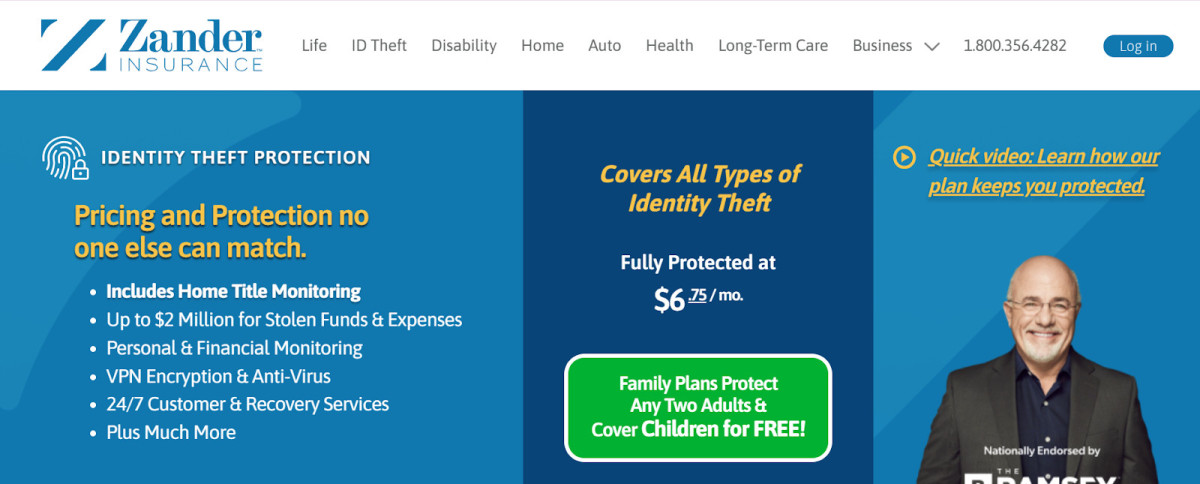
Zander is an excellent and cheaper alternative to LifeLock. It offers higher limits for stolen funds reimbursement.
LifeLock and ID Resolve aren’t the only identity protection services on the market. Some other good alternatives include:
- IdentityForce: IdentityForce offers identity monitoring and restoration services, with plans starting at $19.99/month.
- Zander: Zander focuses more on the insurance and restoration side of things, making it a better choice if you primarily want insurance for stolen funds, as it offers up to $2 million in reimbursements. It also offers monitoring and restoration services and is cheaper than LifeLock.
- IDShield: IDShield offers individual and family plans starting from $14.95/month.
Conclusion
I hope this guide was helpful! A lot of what these companies do are available for free. For example, credit monitoring and alerts are available from Experian, Credit Karma, and other companies. There are also free options that help you track if your email has been exposed in a data breach.
However, once your identity is stolen, it can be overwhelming to deal with. Companies like ID Resolve and LifeLock help you get your life back on track.
Of the two, LifeLock offers better value for money. One of its main benefit, in my opinion, is its insurance for stolen funds. It will certainly give you peace of mind knowing that if money gets stolen from your bank, you can be reimbursed for it!
In fact, the stolen funds reimbursement is the main benefit of LifeLock. Everything else is pretty much available for free.
You can use Credit Karma for alerts of credit activity and freeze your credit with the credit bureaus to prevent accounts from being opened in your name. Plus, your bank will likely detect suspicious activity and text or call you when that happens anyway.
Related posts:
 Is Kodi Safe? Discover the Facts About This Popular Media Player
 Uncovering the Magic of ICMP: How It Keeps Your Network Connected
 How to Protect Yourself from Identity Theft
 A Comprehensive Review of IdentityForce
 ID Guard vs LifeLock: Which Offers Better Protection and Value?
 How to Secure Your Mac with an SSHd Keygen Wrapper?
 ITunes Account Login Troubleshooting Guide
 TruConnect Phones – The Best Way to Save Money and Stay Connected
